

Device Quiz of the week

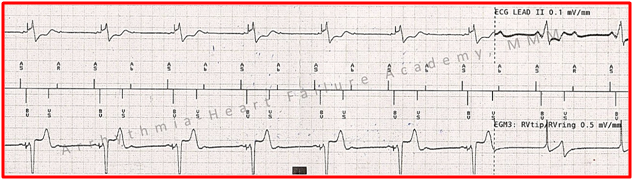
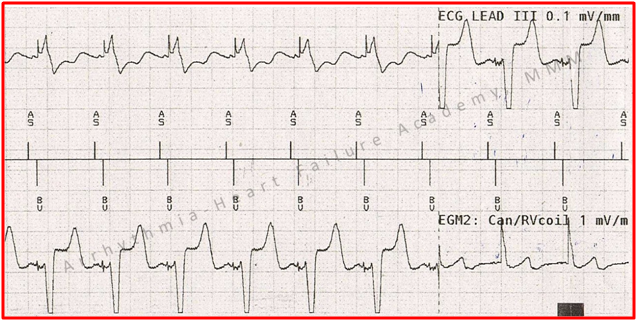
Pacemaker lower rate 70bpm
Choose the right option
- (a) Pacemaker functioning normal
- (b) Sensed AV delay most likely more than 200ms
- (c) Atrial oversensing
- (d) Most likely T-wave oversensing
The answer is option (d).
Pacemaker pacing rate is far below the lower rate and hence not functioning normal. The sensed AV delay must be less than 200ms if the onset of the P-wave is taken into consideration. Atrial oversensing would not have resulted in violation of lower rate. It would have caused rather unnecessary ventricular pacing. Most likely T-wave oversensing by the ventricular lead.
ECG Quiz of the Week
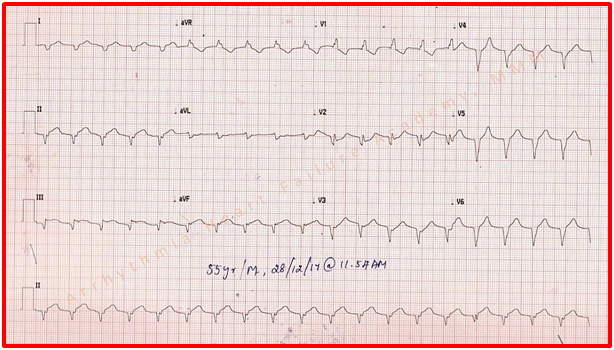
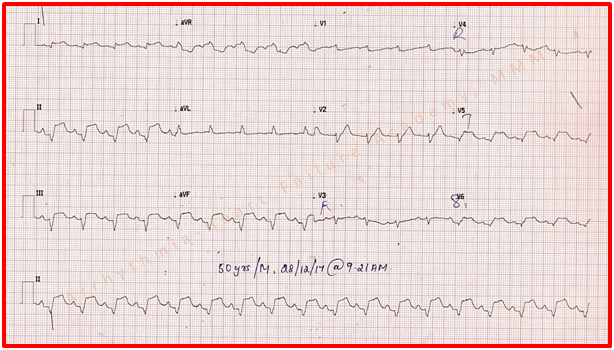
What is the diagnosis?
- (a) Accelerated idioventricular rhythm
- (b) Supraventricular tachycardia with aberrancy
- (c) Sinus tachycardia with trifascicular block
- (d) Limb and precordial electrode misplacement
The answer is option (a).
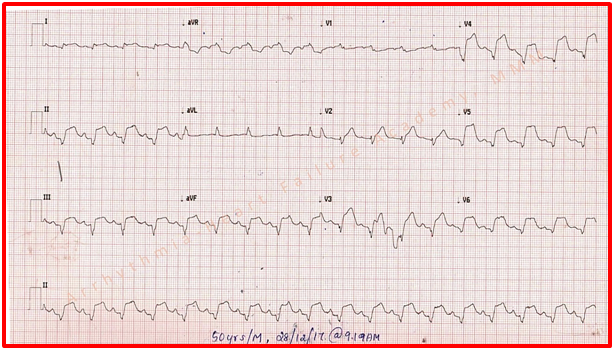
The tachycardia was noted during acute inferior - lateral posterior wall MI (ECGs are shown below). This is accelerated idioventricular rhythm driven by peri AV junctional region in the ventricle. The relatively wide QRS (particularly seen in lead aVR 110ms) should raise the suspicion of aberrant AV conduction (during sinus rhythm or supraventricular tachycardia) or ventricular tachycardia. The sharp QRS complexes however are against the diagnosis of ventricular tachycardia even though abnormal QRS axis in limb leads (North West axis) raises the suspicion of ventricular tachycardia. The ST segment elevation in inferior leads with loss of R-waves in these leads and also in the lateral precordial leads with preservation of the R-wave in V1 raise the suspicion of Inferior-Lateral posterior wall MI. The retrograde P-wave during the tachycardia are seen more clearly in the inferior leads at the end of the QRS.
EP Quiz of the Week
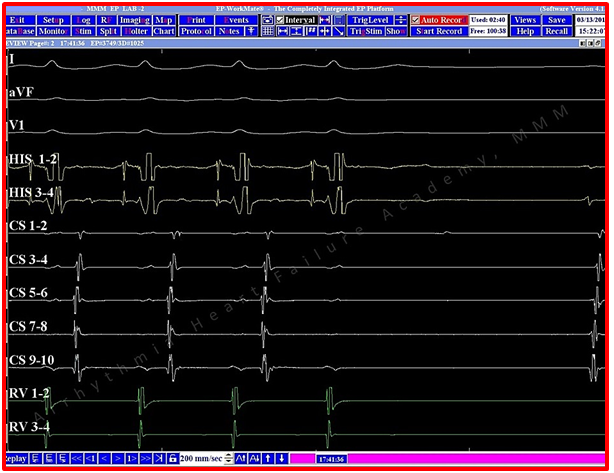
The differential diagnosis of tachycardia does not include
- (a) Atrial tachycardia
- (b) AVNRT
- (c) AVRT
- (d) None of the above
The answer is option (d).
The mode of tachycardia termination many a times help in making the most probable diagnosis. Among the supraventricular tachycardia, a specific pattern of termination – atrial electrogram followed by termination almost rules out atrial tachycardia. A premature ventricular electrogram without associated atrial electrogram terminating the tachycardia also most often rules out atrial tachycardia. It also rules out AVNRT if it coincides with the His bundle electrogram. The pattern of termination of the present tachycardia does not help in establishing or ruling out atrial tachycardia, AVNRT (atypical), AVRT.